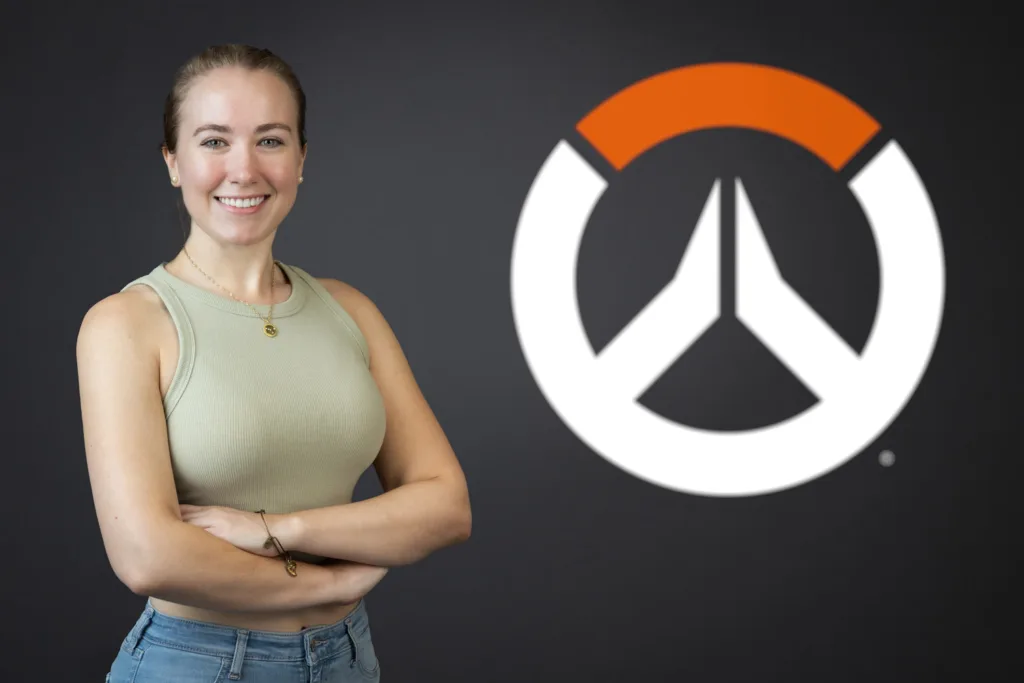
Miranda Moyer is a Narrative Lead on Overwatch at Blizzard Entertainment, currently leading the studio’s most ambitious storytelling effort to date: The Reign of Talon, a fully connected, year-long story arc launched in February 2026. The arc follows the villain Vendetta’s rise across six seasons of interconnected narrative, unfolding through cinematics, motion comics, in-game events, and live world updates — with Miranda’s story direction tying together ten new hero introductions and major faction-driven events.
She joined Blizzard in 2018 as a Quest Design intern on World of Warcraft before transitioning to Overwatch in 2020, where she has risen from Associate Narrative Designer to her current lead role. Her contributions to the franchise include hero concepts and backstories for Venture, Emre, and Freja, voice lines for Moira and Sigma, and the beloved Loverwatch dating sim. She holds a B.A. in Interactive Media and Game Design from USC.
To start, can you walk us through your path into narrative design—from your early interest in storytelling to becoming Narrative Lead on Overwatch? And what does that role actually entail on a day-to-day level?
I have been playing video games since I was very young. I loved all sorts of games, but around the 2010s I found myself more drawn to games with immersive stories and worlds that get you invested beyond just gameplay mechanics. Once I learned that making games was a viable career path, I knew that’s what I wanted to do. I was fortunate enough to get accepted into USC’s Interactive Media and Game Design program, which really spoke to me given its emphasis on games as an art form. From there, I eventually landed a Quest Design internship and then a full-time role on World of Warcraft (WoW). My years-long passion for Overwatch led me to join the team as an associate narrative designer. Over the past few years, I’ve gone from associate to lead.
As Narrative Lead on Overwatch, I’m responsible for plotting out at a high level who our heroes are, how the world is changing, and how story presents in a Player v Player (PvP) game. I work across teams to help connect overarching narrative goals with in-game implementation, whether that’s character voice lines, map updates, skin themes, etc. Day to day, that looks like a mix of writing, editing, creative direction, and collaboration.
You’re leading The Reign of Talon, Overwatch’s first fully connected, year-long story arc. What was the vision behind moving to this kind of long-form, seasonal storytelling?
I think one of the most vital elements of Overwatch’s success has been its world and characters, standing alongside its engaging mechanics. However, since the game’s release in 2016, much of our story content has lived as one‑off moments—often snapshots of the past rather than a narrative that meaningfully moved the world forward. Similarly, over the last few years, many heroes were introduced in an ad‑hoc way that made it difficult to create sustained momentum across the broader story.
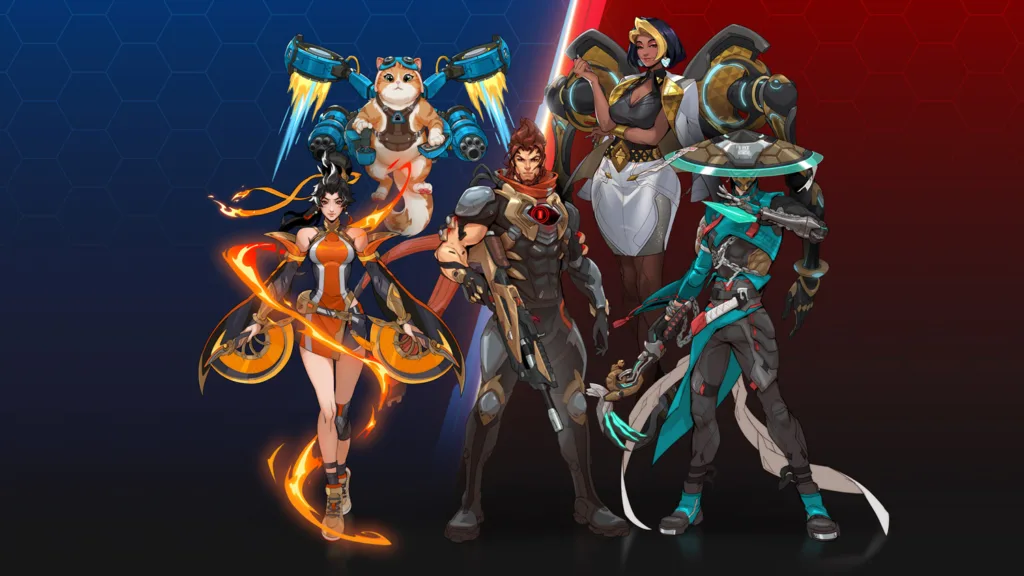
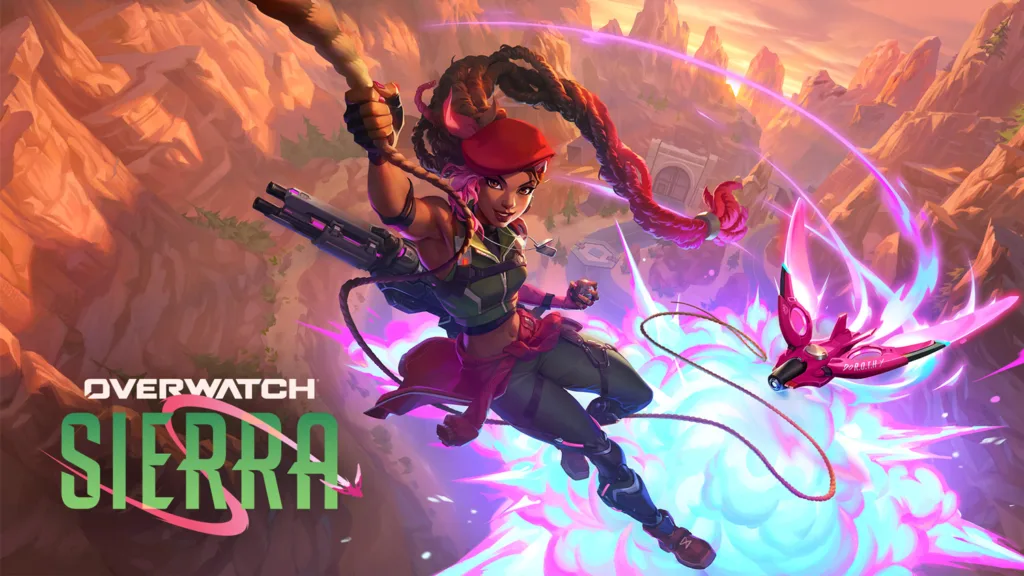
The goal of The Reign of Talon was to change that by establishing a deliberate, planned arc of storytelling that spans all of our narrative vehicles—comics, hero releases, cinematics, and in‑game content—to actively progress the state of the world. Vendetta’s release laid the foundation, and her takeover and expansion of Talon in Season 1 disrupted the universe in a way that forced our heroes to respond and evolve. Sierra’s release in Season 2 was similarly designed not as a standalone character, but as a continuation of that larger narrative. Our hope is that this approach allows Overwatch’s story to feel cohesive, forward‑moving, and rewarding—where characters and the world grow meaningfully over time.
Vendetta is at the center of this arc—what made her the right character to drive such a major shift in the Overwatch universe, and how did you shape her identity as a villain?
Vendetta’s backstory, written by Jude Stacey, makes her an invaluable means to drive the story of Overwatch forward given just how much of the world’s history connects to her. As the daughter of Antonio Bartalotti, one of the former heads of Talon (our primary antagonist organization), she was not only impacted by the actions of Overwatch that led to her father’s death, but also by the new leaders of Talon who found her inconvenient to keep around in Antonio’s absence. This inherently positions her as someone with a chip on her shoulder that concerns two of our most pivotal factions in the game, and with her brash nature driving her to act in as grand a way as required to see results, she demands a response from groups who may otherwise have remained static.
This story unfolds across cinematics, in-game updates, voice lines, and written content. What does the process look like for keeping all those narrative threads aligned and intentional?
Planning and communication are pivotal in ensuring our content lands as expected on such a comprehensive scale. We have gone to great lengths to map out all our seasons, including our major story beats, but also more granularly how those beats are distributed through our storytelling avenues and then reinforced in-game through elements like voice lines, map updates, skins etc. It is a very painstaking but rewarding endeavor to present the story using so many different elements.
A lot of our processes are still developing, given this is our very first go at such an involved story arc. We’re incredibly fortunate to be undertaking this effort on a game like Overwatch, as so many members are incredibly passionate about and willing to support the story. From map design to hero design to UI, we have a ton of backing to help make the story feel like a living part of Overwatch.
With ten new heroes being introduced during the arc, how do you decide who enters the story when and how their personal narratives connect back to the larger conflict?
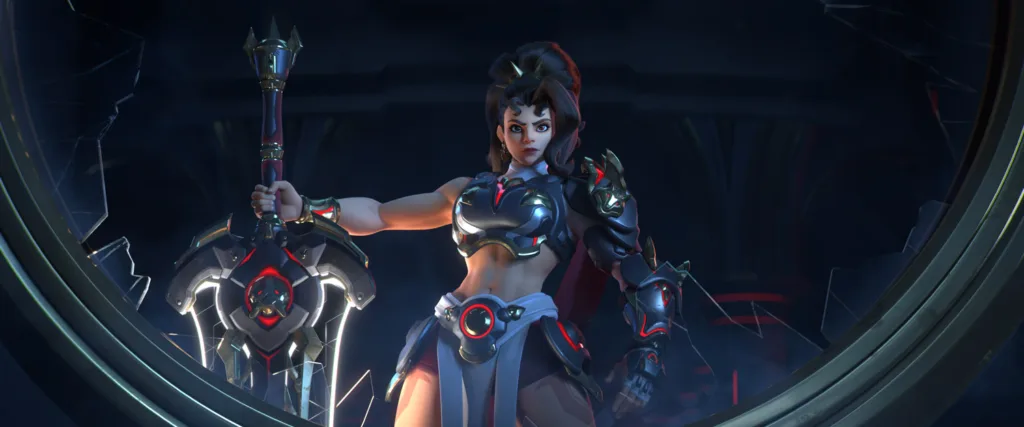
We planned out the year’s story and, in doing so, got a good picture of who we’d have to work with. From that point, we were able to solve the puzzle of how each hero would tie into the overarching story. Some heroes were driven more by the narrative, while others were ideas first and incorporated into the narrative thereafter. Domina is a good example: she was created from the idea of a diamond-themed tank kit, and eventually we put Vishkar (in-game tech megacorporation) theming on her. From there, we had to figure out where Vishkar would have a hand in the greater year’s story, and given Domina’s villain status, we felt it made sense for her and Vendetta to forge a secret alliance — where Domina would secure state-of-the-art Vishkar shielding for Vendetta in exchange for redevelopment rights for any areas Vendetta leaves in ruin.
Faction-driven events like Conquest are reshaping how players experience the world. How do you design narrative moments that feel impactful while still working within a competitive, multiplayer environment?
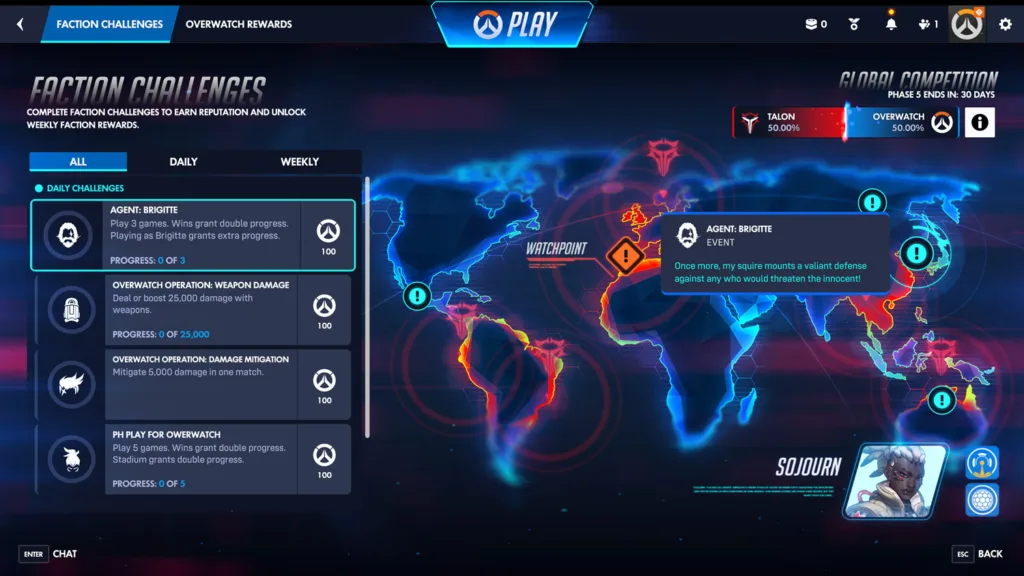
Something that has always been special to me about Overwatch is just how much story permeates a game that is so focused on PvP. Overwatch’s very creative and pervasive incorporation of its story helped the game reach so many people (myself included), and that legacy of storytelling — which is somehow both inobtrusive and encompassing — is something we’ve tried to uphold. In practice, that takes a few forms: we have dedicated story pieces such as cinematics, hero trailers, and motion comics where we have all the space to tell the story we need to tell. To reinforce those pieces, we reflect the changes in-game with things like updates to map art (Gibraltar is a standout example this year) and new voice lines from our heroes. New heroes are probably our biggest means of making the story impactful in the competitive environment, allowing gameplay reads to double as storytelling avenues so players can absorb the story through the act of playing.
You’ve contributed to fan-favorite characters like Moira and Sigma. What’s your approach to deepening established characters while staying true to what players already love about them?
Many of the heroes from Overwatch 1 (OW1) were created on incredibly strong foundations, and as a result there is a lot of room to maintain their original fan-favorite elements while evolving with the ongoing story. Sigma has been one of my favorites to work with —I think getting to see more of his interactions with his colleagues in Talon has provided a lot of interesting story opportunities. It’s also really fun seeing how our heroes interacting allows them to flesh out one another. For example, by showing Sombra’s unexpected closeness with Sigma, we’ve had more space to explore her nature beyond that of a mischievous hacker, while also outlining more of Sigma’s condition.
You’ve worked on both World of Warcraft and Overwatch. How does your approach to storytelling change between a large-scale RPG and a fast-paced hero shooter?
In an MMO like World of Warcraft, the story is often one of the main draws and features. Therefore, you have the space to tell longer and more nuanced story arcs that players can really sink into. In Overwatch, the storytelling challenge is almost the opposite. It’s a fast‑paced hero shooter and lacks the space for two characters to have a dramatic exchange in the middle of King’s Row while I’m trying to avoid being run over by Zarya. My approach has shifted from building long‑form narrative structures to focusing on clarity, tone, and emotional impact. Every small piece of story has to do a lot of work—establish character, reinforce the world, and still support gameplay—while all adding up to a cohesive larger narrative over time.
From experimental projects like Loverwatch to darker arcs like The Reign of Talon, how do you think about tone and variety when expanding the Overwatch universe?
Because Overwatch is such a big and diverse universe, tone and variety are very important elements of the story. Projects like Loverwatch (the non-canon dating simulator) let us experiment, have fun, and explore characters in lighter, unexpected ways. Mainline, canon story arcs like The Reign of Talon, in contrast, allow us to dig into higher stakes and more serious themes—delivering on all the groundwork we’ve laid for many years. Everything should feel tonally intentional, authentic to our heroes, and most importantly reinforce our optimistic future —a world worth fighting for. No matter how playful or dark the story is, it still has to feel like it belongs in Overwatch and says something meaningful about the characters or the world.
As live-service games continue to evolve, what excites you most about the future of storytelling in Overwatch—and where do you hope to push things next?
I think the fact that Overwatch has never explored such a concrete and comprehensive forward progression of its story means that our world has an absolute ton of potential to explore. Some of the elements we’re touching on now have been planted and unanswered for nearly a decade. At this point, we have 50+ heroes’ worth of goals, ambitions, and motives to action on —and as we progress these stories, new goals naturally evolve from those conclusions. I’d love to turn those long-standing questions our players have into compelling stories that make them worth the wait!