
Holiday survey highlights
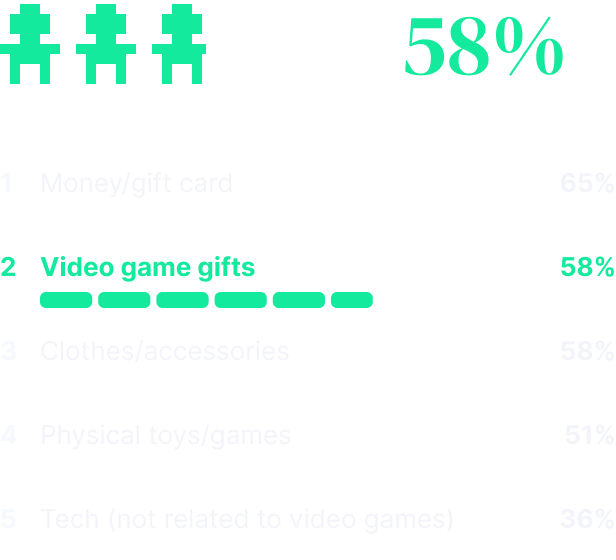
Nearly three in five kids (ages 5-17) plan to ask for a video game-related gift this holiday season.
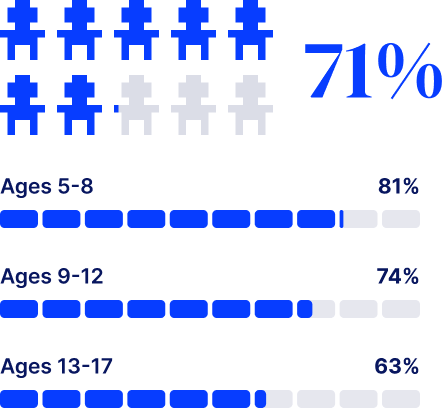
Kids want to play more video games with their parents.


Among parents who say they are planning to buy video game gifts this year, the average amount they intend to spend on video games is $806.


60%
Three in five kids (60%) see playing video games as a family holiday tradition.
As one of the world’s most popular forms of entertainment, video games aren’t just something kids want to receive, they’re something kids want to share. That’s the power of playing video games: it creates opportunities for shared experiences and traditions that bring families together.
Stanley Pierre-Louis, president and CEO, Entertainment Software Association


Playing games together is the #1 reason why parents purchase video game gifts for their younger children ages 5-8.
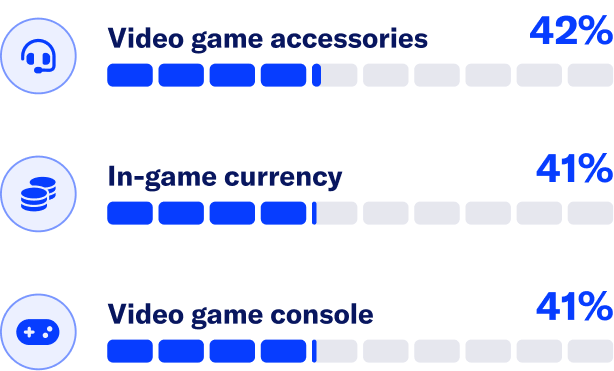
The top three specific video game-related requests from children:

Trust & Safety
A Parent’s Guide to Gifting Video Games
Parents don’t have to choose between giving their kids what they want and feeling confident about their safety. Controls and other simple steps can provide peace of mind by helping parents create the right experience for their families.
Orit Michiel, president, Entertainment Software Rating Board

To learn more about nurturing an ongoing conversation around video games in your home, visit ESRB’s Family Gaming Guide and follow the ESRB blog.
Did I check the age rating and is it appropriate for my family?
The Entertainment Software Rating Board (ESRB) assigns age and content ratings for video games and mobile apps to help parents decide which are appropriate for their kids.
Age Rating categories suggest a game’s age appropriateness. Age ratings include E for Everyone, E10+ for ages 10 and older, T for Teen, M for Mature for ages 17 and older or AO for Adults Only.
Content Descriptors highlight the content that may have influenced the assigned age rating. ESRB has more than 30 content descriptors to let parents know if a game includes language, suggestive themes, violence and more.
Interactive Elements provide upfront notice about interactive or online features but do not influence the rating assignment of a game. This includes user-to-user communication or whether players can spend money inside the game.
Have I set up parental controls on my game device?
Tools exist on virtually all game devices to help parents, caregivers and individual players easily and efficiently manage the gameplay experience for their family. Parents can set up parental controls for their home, giving kids permission to experience games in a way that makes the most sense for them. Parental controls can include:
- Filtering games by ESRB age rating
- Managing time spent playing games
- Controlling – or preventing – spending
- Limiting – or blocking – communication with other players
- PIN and password settings to prevent unwanted changes
- Regular playtime reports
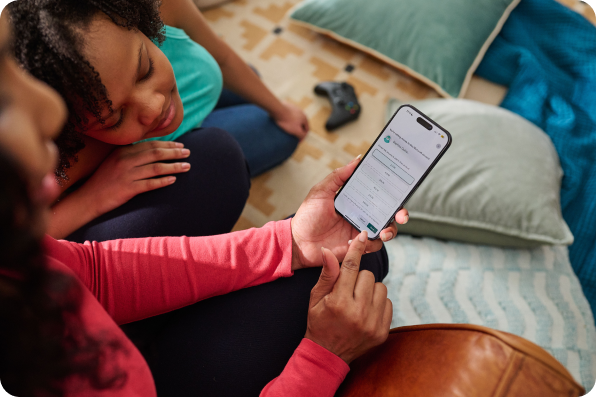

Have I had a conversation with my child about engaging with others online?
A growing number of games allow players to interact with others online, which can be a fun way to stay in touch with friends and family who live further away. Families should decide if this is allowed in their household and, if not, buy single-player games or use parental controls to limit or block interactions with other players.
If children are allowed to interact with others online, discuss appropriate behavior, like treating other players kindly and respectfully, and have conversations with children about interacting with strangers so they know what to do if they encounter inappropriate behaviors online.
Remember: kids can always mute, block and report a player and, if they’re unsure about someone’s actions, they can talk to a trusted adult for advice.
2026 Holiday Survey Methodology
YouGov and ESA conducted a 7-minute online survey in the U.S. from Oct. 2-16, 2026 among 3,557 respondents ages 5-65 recruited from YouGov’s proprietary online panel. Data is weighted to be representative of the overall U.S. population in terms of age, gender, ethnicity, education and census region. Respondents ages 5 to 17 were asked to complete the survey under the supervision of a parent.
Explore these steps the video game industry is taking to help protect its player community.

Codes of Conduct
Guidelines and community standards establish acceptable behaviors.

Human Oversight
Trained individuals help moderate conduct and content in gaming environments.

Parental Controls
We provide parents and caregivers with comprehensive information and tools they need to decide which gameplay experiences are appropriate for their children.

Partnerships
Video game developers, publishers and platforms collaborate to promote trust and safety in the player experience.

Player Controls
The video game industry empowers players with the tools and information necessary to manage their gameplay experience on screen.

Promoting Positive Play
Video game communities benefit from environments that encourage sportsmanship, camaraderie and mutual respect.

Technology
Advanced technologies help prevent harm before it happens.