
Carrie Ray-Hill has spent more than 15 years bringing playful learning to classrooms. As lead game producer at iCivics, she has contributed to more than 25 games and interactive experiences, collaborating with institutional partners, including the Council on Foreign Relations and Colonial Williamsburg, as well as government agencies such as the Department of Defense and the National Endowment for the Humanities, to develop award-winning educational projects.
Before joining iCivics in 2010, Carrie taught humanities courses to students in grades 4–12 in St. Louis and Washington, D.C. Outside of work, she enjoys discovering exceptional cheeses, watching British panel shows, and building LEGO sets.
In 2026, iCivics received the Entertainment Software Association’s Interactive Entertainment Impact Award, recognizing its contributions to advancing the positive impact of interactive entertainment.
1. How did your personal relationship with video games begin?
I was 11 years old when I first played Duck Hunt at my friend’s house. I embarrassed myself with my full-body attempt at playing Mario Bros., so they gave me the orange gun as a consolation. I carry the shame of not having much of a twitch response to this day.
So I had a distant relationship with video games for a long time, until I was hired at iCivics in 2010. I immediately went out and bought the Wii system and a handful of games: Lego Indiana Jones, Call of Duty, and Raymond Raving Rabbids.
2. What made you want to build a career in video games?
I joined iCivics as a subject matter expert (SME) and curriculum writer. I didn’t intend to work in games, but when you are on a small team you do a bit of everything. I got my feet wet helping write and guide our games from a teacher’s perspective.
As time passed, I gained experience and leveled up to the iCivics Game Girl. Along the way, so many different things inspired me and made me want to pursue this unintentional career path. As a n00b, I’ve been guided to play amazing games under the guise of research: The Stanley Parable, Storyteller, Reigns, The Case of the Golden Idol…
I have also attended over a decade of conferences, from Games for Change in NYC to PlayMakeLearn at University of Wisconsin-Madison.
3. For readers who may not be familiar with iCivics, what does the organization do and how do games fit into its work?
Founded in 2009 by Supreme Court Justice Sandra Day O’Connor, iCivics is a nonpartisan organization dedicated to advancing civic learning by providing educators and students with the knowledge, skills, and resources they need to embrace and engage in civic life together. We empower educators to make civic education a nationwide priority, so that all young people believe in our country’s future and find the confidence to shape the world around them .
From the get-go, Justice O’Connor wanted to engage kids in a different way. Initially, the plan was an eBook (remember, we are talking 2007), but she talked to a lot of smart people, and Dr. James Paul Gee convinced her that video games were the thing. Good games, done right, can ignite student engagement and create transformational learning opportunities that bring learning objectives to life. More than 25 titles and 220 million plays later, we’ve done our best to meet the high expectations of these two icons.
4. What makes video games the right medium for helping students understand government, democracy, and their role in society?
Games are very good at helping people understand systems. They let us see how one decision leads to another. They give us a role, a problem, and a chance to experience the results of our choices. The feedback is immediate and helpful. Democracy is full of meaty systems that touch the lives of everyone in this country.
At iCivics, students design and negotiate a bill… and watch it die in committee… and get genuinely mad about it. Then they try again. They argue a Supreme Court case. They run a presidential campaign. They manage a county. They determine whether someone’s constitutional rights have been violated.
5. When you’re creating a game around a complex topic, where does that process begin?
The initial spark comes from state educational standards and teacher needs. What needs to be taught? What is hard to teach or often gets glossed over due to its complexity?
The federal lawmaking process is wild when you sketch it out, but when you must navigate the system yourself, the process becomes memorable and understandable. We do a lot of research into the topic of the game, consult subject matter experts, and start designing mechanics and narratives that bring the player along.
6. How do you make sure the educational goals of a game are attainable without losing the fun and interactivity that make games so compelling?
It requires a split personality. I become Jekyll and Hyde, swinging between cracking puns about the Enlightenment and being an absolute stickler for the content accuracy. My decade of teaching middle school probably made me this way.
It’s a herculean effort to keep kids’ attention while making educational inroads, but game play features do a lot of the heavy lifting.
7. What’s something about making educational games that you think people might be surprised to learn?
There is so much research and writing involved! I joke that each iCivics game, especially a history game, is like producing a college senior thesis. As a perpetual student, that makes game making such a perfect match for me.
I rely on my excellent teammates to know how to accomplish all the cool things I’m not able to do: art, UX, game design, engineering, QA, and more.
8. Is there a particular game or project you’ve worked on that stands out to you? What made that experience memorable?
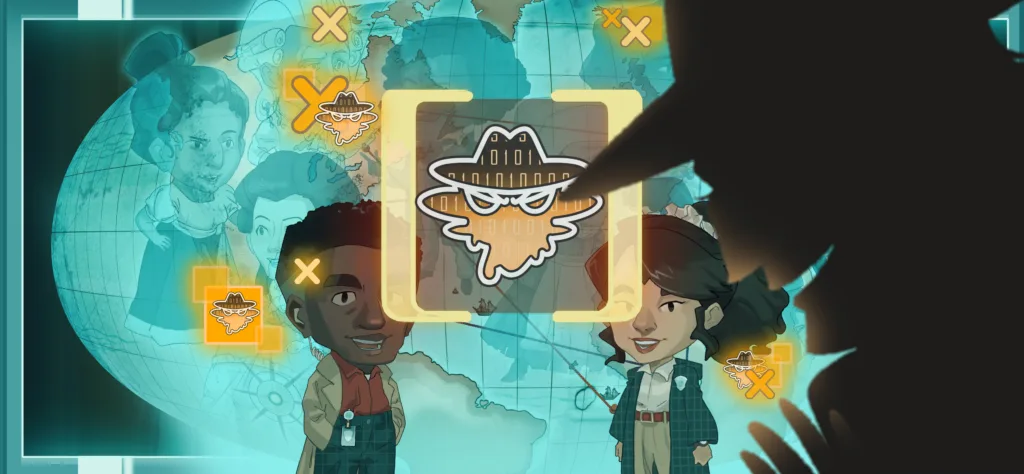
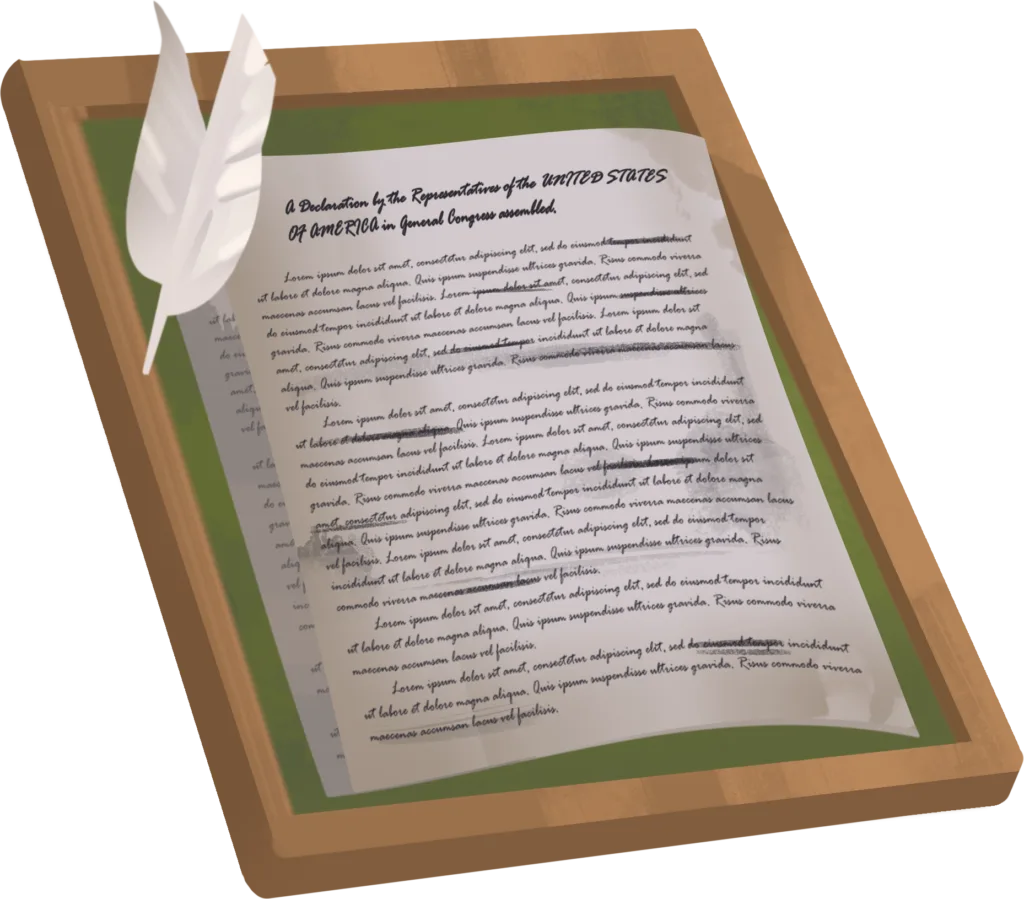
Our game, Investigation Declaration, will always stand out.
In college, I was an intellectual history nerd. The movement of people and ideas always piqued my interest and informed my studies. Many years later, iCivics had an opportunity to make a game about the Declaration of Independence but I really didn’t want to take the normal route.
I got a shelf-full of books from the library, dusted off my old course notes, and played some new-to-me games. The Case of the Golden Idol and an old book of Mad Libs inspired me to build the scene exploration, word and phrase collection, and story crafting. A book by historian David Armitage that traces the impacts of the U.S. Declaration through the declarations that followed provided the history and overarching narrative. And the linking mechanic that connects Enlightenment ideas across the map? That was inspired by Charlie Day’s ruminations on Pepe Silva. Seriously.
Where else can you blend all these things together and end up with an award-winning game for middle and high school students?
9. After more than a decade working in games, how has your perspective on the medium changed?
My perspective has shifted from fear (remember Duck Hunt?) to fascination. Every time I have the opportunity to craft an experience, I am in awe of what an incredible team can make together.
I love seeing teachers and their students engage with our games, especially when they laugh or argue over a decision point. One day it was a spreadsheet; the next, it was making an impact in the classroom. How cool is that?
I’ve also seen a huge change in how others, including educators, administrators, and parents, receive educational games. For the first five years or so, we were evangelists, trying to convince them that well-made games intended for classroom use were worth trying out. Now it feels like we’re preaching to the choir.
10. What continues to excite you about making games, and what do you hope players take away from the experiences you create?
It is so important that our students, and the adults in their lives, understand our civic systems and see themselves in those systems. I haven’t used or seen instructional materials that do that as well or as efficiently as games.
It’s such an honor to make something that could switch on a light, spark curiosity, or develop a greater sense of personal agency around such a critical subject. I’m sure I’d enjoy making cool, non-educational narrative or puzzle games, but I wouldn’t get the bonus warm fuzzies that keep me going.