
Mari Saastamoinen Minto is a Senior Audio Director at DICE – part of Battlefield Studios – with over 18 years of experience working in audio on the Battlefield Franchise. She is recognized as one of the key figures in establishing the signature, high quality audio style of Battlefield. She is leading large audio teams across Battlefield Studios developing high quality, believable and immersive soundscapes for Battlefield. With a passion for sound and a background in film sound she’s been part of developing the gritty and immersive soundscapes found in the Battlefield games today.
1. What sparked your interest in working with audio, and how did that passion ultimately lead you to the video game industry?
I think I’ve always been interested in sound. Whether through music, voice, or sound effects, I’ve been drawn to it in one way or another.
As a kid, my mum gave me a tape recorder. I used to record myself onto cassette tapes and play around with anything that made noise. Music was always present growing up, too. I played cello throughout school, as well as guitar, bass, and accordion, sang in choirs, and played in bands. That eventually led me to study audio engineering and recording at university.
One of my earliest memories of sound design was going to the cinema to watch Jurassic Park. I was completely amazed by the sound of the dinosaurs and hearing them in surround sound. It made a huge impression on me. I didn’t realize it at the time, but that experience probably planted a seed that has stayed with me ever since.
A turning point came when I was eighteen and watched the extended The Lord of the Rings films along with all the behind-the-scenes material. Learning how they created the sound of the Balrog, how Andy Serkis developed Gollum’s voice, and how the Orcs came to life through sound opened a whole new world for me.
I remember thinking, “People actually do this for a living?”
That curiosity led me to film school, and the more I learned, the more I understood how I could create sounds and tell stories through audio. In my final year, I applied for an internship at DICE. I’d heard that game audio was growing in Stockholm and wanted to learn more about it. The day after I submitted my application, they called me for an interview.
The team I joined was among the most creative, passionate, and curious people I’ve ever met. Being around them was incredibly inspiring. Something sparked in me, and I wanted to be part of what they were building. Looking back, I’m incredibly grateful for that opportunity and for all the people I’ve met along the way. I learned so much from working with people who were always curious, creative, and always willing to explore new ideas. That made a lasting impression on me, and it’s something I try to carry forward with my team today.
2. You’ve worked on the Battlefield franchise for nearly two decades—what first drew you to Battlefield, and what has kept you passionate about the series over the years?
To be honest, I didn’t know much about Battlefield when I started at DICE. I was coming from a film background, and early on my mentors asked what I thought could make the game we were working on sound better.
I spent my first weeks at DICE playing other FPS (first-person shooter) games because I hadn´t explored the genre much before. I remember telling
them there were opportunities to enhance details in the foley, improve how the dialogue was mixed, and do more with surround sound. They gave me a chance to show what I meant, so I did.
Coming from Swedish film, I was used to working with natural soundscapes, foley, and dialogue, and thinking about how sound supports a story. Battlefield was obviously a very different experience, but I felt there was room for more detail, more texture, and more life in the world. I found that I really enjoyed working with those kinds of details and finding ways to bring more of them into the game.
What has kept me passionate over the years is the combination of the games we build, the people I work with, and the players who experience them. Battlefield gives us the opportunity to tell stories while working with incredibly complex and challenging soundscapes. There’s always something new to explore, whether it’s the large-scale battles, the quieter emotional moments, or all the details in between.
It’s also a game I enjoy playing myself. Being able to build something that I would want to play has been a big part of what has keeps me motivated.
3. As Senior Audio Director, what does your role look like day-to-day, and how do you lead and coordinate large audio teams across Battlefield Studios?
My day-to-day has changed quite a bit over the years. I don’t spend as much time in a digital audio workstation (DAW) or the editor anymore, but I still sync the game every morning. Over coffee, I download the latest build, play part of the game, listen to new features, try to stay close to the experience we’re building.
A lot of my work is making sure we’re all pulling in the same direction. Battlefield is a massive game with a lot of moving parts, and audio touches almost everything. My role is often about connecting those pieces and showing how audio can contribute to the overall player experience. Where can audio help tell the story better? Where can it create more emotion, clarity, or immersion?
Those conversations happen with the audio team, but also with directors, producers, designers, and other disciplines.
Today, we’re working across multiple locations as Battlefield Studios – Criterion, DICE, Motive, and Ripple Effect — so communication becomes incredibly important. Even though we’re spread across different locations and time zones, I’ve always viewed us as one audio team.
To create a great player experience, everyone needs to understand the style, tone, audio direction, and vision we’re working toward. Just as importantly, they need to understand why. How we got here? What’s the philosophy guiding our decisions? What are we trying to achieve for players?
A big part of my role is creating that clarity — guiding the team, mentoring people, and making sure we stay aligned. At the end of the day, my job is about helping the team do their best work and ensuring audio has a voice in shaping the player experience.
4. Battlefield is known for its signature, immersive sound design. From your perspective, how would you describe the “Battlefield sound”?
Raw, gritty, and authentic.
Battlefield is a modern soldier experience, and for me it starts with putting yourself in that boots-on-the-ground perspective. I often close my eyes and listen to the game. Can I understand what’s happening around me from the soundscape alone? Do I feel like I’m there?
I want to feel the physicality of it — the breathing, the effort, the dirt on my helmet, the grit in my teeth, the mechanics of the trigger pull, and the way sounds interact with the environment around me.
Everything needs to feel grounded and believable. If I can forget that I’m listening to a game and feel like I’m standing in that world, then we’re heading in the right direction.
5. You’ve seen the franchise evolve over many years—how has Battlefield audio changed as technology and player expectations have grown?
I’ve always felt we could do so much with the audio in Frostbite. The tools and systems have evolved over the years, and because we’ve been working with them for so long, we’ve had the opportunity to experiment, learn, and push them further with every title.
One of the biggest changes I’ve seen is the level of detail we’re able to achieve today. Everything has become more granular. The worlds we build are more detailed, gameplay has evolved, and players notice things they might not have noticed twenty years ago. Player expectations have grown alongside technology.
When I started, we were already creating great-sounding Battlefield games, but today we’re able to build worlds with a level of detail and physicality that simply wasn’t possible before. We can add layers of texture and nuance that help players feel more present in the experience.
Whether it’s weapon reflections, improvements to multiplayer voice communication, environmental details, or the way sounds interact with the world around you, we’re constantly looking for ways to make the experience more immersive and believable.
6. When creating the audio for Battlefield 6, what were the biggest goals, innovations, or areas the team wanted to push forward?
With Battlefield 6, we really doubled down on evolving and refining our acoustic systems. Some of the ideas and improvements we’d been discussing for years began to take shape.
One of our biggest goals was creating an even more immersive and believable player experience. We wanted players to feel more connected to the world around them and better able to read and understand the battlefield through sound. That meant looking at everything from weapon acoustics and reflections to voice communication, environmental detail, and spatial awareness.
Our team has focused heavily on improving the mix. Frequency-based HDR mixing, threat-based mixing, 3D headphone audio, and Atmos support all examples of areas we’ve continued to push forward to create better experiences across different listening setups.
Battlefield has a very strong audio identity. There are things players expect to hear and feel when they play. The challenge — and the fun part — is finding new ways to build on that foundation and surprise players while still making it feel authentically Battlefield.
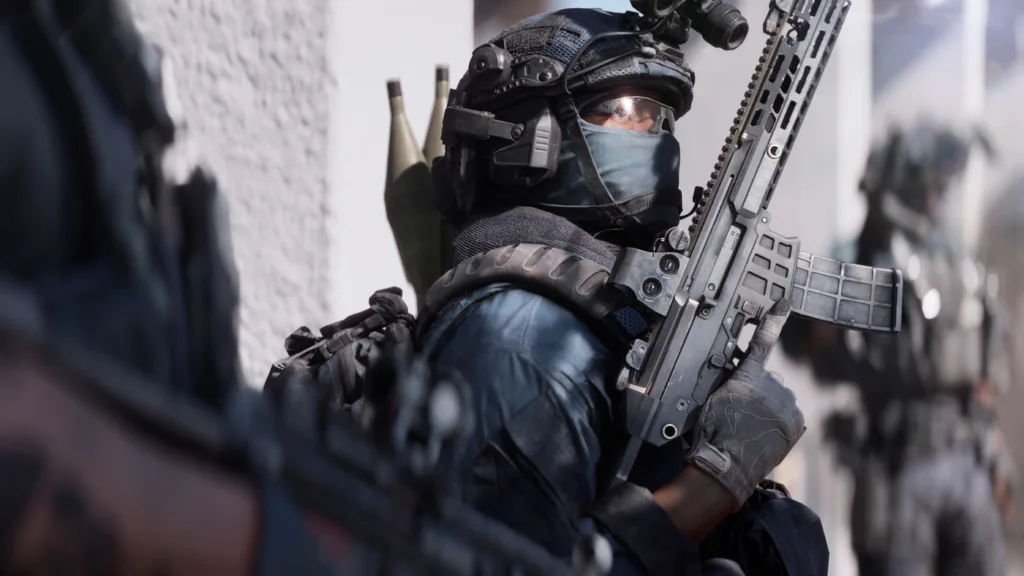
7. Can you walk us through the process of creating a sound in Battlefield—from the initial recording or concept to what players hear in the final game?
Because of the style and tone of Battlefield audio, recording has become a natural part of its DNA.
For Battlefield 6, we made a conscious decision to go all in on recording. There was a real drive to get back out into the field and capture sounds that could help evolve our soundscape and designs. We travelled to the California desert in search of the perfect weapon sound. By the end of the project, we’d recorded weapon fire in the US, the UK, and Sweden.
With weapons, it’s not just about the shot itself. It’s about how the sound travels, how it reflects, and how it sits within a space.
But weapons weren’t all we recorded. We captured bullet impacts, destruction sounds, participated in Swedish military exercises, and attended an airshow to record jets. Not all of those recordings were intended for direct use. A big part the process was understanding the reality behind what we’re building. That said, the jet recordings turned out to be fantastic — and they’re what players hear in the game today.
Recording gives us more than sounds. It gives us an understanding of behavior, scale, and physicality of a weapon. The weight of a tank. The movement of air from a jet passing overhead. From there, the work really begins. Before we know what content we need, we need to understand why we need it. Combat immersion is at the core of our soundscape, and we tend to think about it from three perspectives: the soldier, the hardware, and the world.
The soldier’s perspective is about physicality — the snap of a trigger pull, combat boots on the ground, breathing, running, taking cover, and bullets flying overhead. The hardware needs to feel tactile and believable. Weapons, vehicles, and gadgets all need to communicate weight, mechanics, and movement.
Then there’s the world itself. The maps need to feel alive, rich in detail, and constantly changing. Destruction is a big part of that. From there, we bring everything into the game. That’s usually when new challenges appear. A sound that felt great in the studio might disappear in the middle of a firefight, while seemingly small detail can have a much bigger impact than expected.
So we play, listen, adjust, and repeat. A lot of the process is simply understanding how all these pieces work together within the larger soundscape. In the end, for me, it always comes back to listening. Can I close my eyes and understand what’s happening around me? If I can, we’re usually on the right track.
8. Battlefield games bring players into large-scale, chaotic battles. How do you balance realism with gameplay clarity so players can still react, communicate, and make decisions in the middle of the action?
Battlefield is, after all, a game, and gameplay is the most important thing. Our job in audio is to support and enhance that gameplay.
All sounds are important, but they don’t all serve the same purpose. I often think of it like mixing music — except it’s an orchestra of war. Weapons, vehicles, destruction, movement, voice, ambience, and music all exist in the same world, and each of them has a role to play.
Some sounds create immersion and atmosphere. Others communicate information. Most do a bit of both. A big part of our job is understanding the role each sound plays and making sure player hear what they need to hear when they need to hear it. We want Battlefield to feel authentic and believable, but we also want players to be able to make decisions based on what they’re hearing. What is dangerous right now? Where is it coming from? What’s the next threat? What’s happening around the corner?
When the soundscape is working well, players should not think about it. They instinctively react to it. They use sound to navigate the battlefield, communicate with their squad, and understand the world around them while staying immersed in the experience.
9. Is there one sound, moment, or audio detail in Battlefield 6 that you’re especially proud of or were excited for players to experience?
I honestly don’t know if I have a favorite sound.
What I’m most proud of is the overall experience. Audio is a sum of so many different parts, and for me, that’s when magic happens — when all those pieces come together.
There are sounds and moments I enjoy, but what excites me most is hearing the entire experience come alive and seeing how players respond to it.
10. What’s one of the biggest challenges in creating realistic and immersive soundscapes for Battlefield 6—and what advice would you give to someone who wants to work in game audio?
One of the biggest challenges is balancing realism with clarity.
Battlefield is full of movement, chaos, and countless sounds happening at once — weapons, vehicles, destruction, voice, ambience, and music all competing for space. The challenge is making it feel believable while still helping the player understand what’s happening around them.
For someone wanting to work in game audio, I’d say: be curious. Listen to things. Really listen.
Start paying attention to what moves you and why. Is it the way sound and picture work together? Is it a performance? Is it the sound of debris hitting a helmet, glass breaking under a boot, or a weapon reload that just feels right? The more you understand what resonates with you, the more you’ll start to understand your own taste and the kind of experiences you want to create.
Be curious. Ask questions. Experiment. Learn from others.
Most of what I’ve learned throughout my career has come from working with talented people and exploring ideas together.